Thursday, May 7, 2020

Found wreckage of an unknown plane crash.

Parts to an unknown plane crash including pieces to a used ejection seat and rocket tail parts. 

No photo description available.
Used part to a Martin-Baker Ejection seat MK-1 


Martin-Baker MK-1 Ejection Seat

MK1 EJECTION SEAT
The Pre-Mk1 seat used by Bernard Lynch was completely redesigned after the first few tests, to allow for production on a quantity basis. Another series of dummy ejections were also repeated, perfecting the design of the drogue and its stowage and curing the various teething troubles which developed. Finally, on 19th August 1947, Lynch again ejected himself, this time at 12,000 feet at an indicated airspeed of 420mph. He landed safely and afterwards stated that no shocks had been felt, even at that high speed. This successfully demonstrated the smoothness of the ejection gun, the effective protection of the face screen and the efficiency of the stabilising drogue.

In June 1947, the authorities had decided to standardise the Martin-Baker ejection seat for installation in all new service jet aircraft, and the work of production and installation was put in hand for Meteor, Attacker, Wyvern, Canberra and later the Sea Hawk and Venom aircraft.

These seats were provided with a seat pan capable of being raised and lowered to accommodate pilots of varying stature without increasing the height of the seat. The seats also included adjustable footrests, and integral thigh guards to prevent the occupant’s legs being forced apart by air blast. The seat was guided during ejection by four rollers running in a guide rail assembly, bolted to the aircraft structure.

A considerable number of emergency escapes were made with these manually operated seats, which fully justified their introduction in-service aircraft. Their limitations, however, were already obvious and the idea of making the whole sequence of events automatic began to take shape.


No photo description available.
Misc. parts found in the area of the wreck. Including two pen flares, ejection seat parts fuel lines and rocket tail fins. 


No photo description available.
Unknow part to an aircraft drop tank. 

What is know is the Martim Baker ejection seat was used in only a very few aircraft. 

MK1 EJECTION SEAT
Featured in:

Meteor
Supermarine Attacker
Westland Wyvern
Canberra
Hawker Sea Hawk
Venom
Hawker Hunter
J-1


Grumman F-14 Prototype Crash Dec 12 1970

Grumman F-14A-1-GR Tomcat Bu. No. 157980, just before its first flight, Calverton, Long Island, New York, 21 December 1970. (Northrop Grumman Corporation)

1st prototype suffered a hydraulic failure on the second flight and crashed into woods while on approach to Calverton. crashed 30.12.1970.

This video show the crash of prototype number #1 of Grumman F-14 Tomcat project, on a test flight on 30 December of 1970. Due to failure of a hydraulic pump which caused a total loss of flight controls, the pilots ejected safetly before the crash near of the runway at Grumman's Calverton facilities in New York.

(Sorry, video without sound)


Pilot is Killed In Crash Of Plane on South Shore Of Bay


1st LT Burton E. Goldstein of Chicago 


Date 441210
Aircraft C-45F  
Serial Number 44-47398
Squadron 110BU
Home Base Mitchel Field, NY 1
Landing accident due to mechanical failure 
Pilot Goldstein, Burton E
County  USA
State NY
Location Mitchel Field, NY 
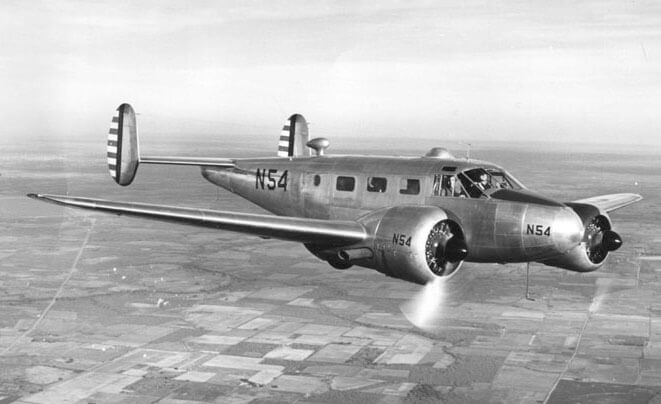
BEECHCRAFT C-45 - Flight Manuals

The Beech Model 18 first flew in 1937 and was a much more modern design than the earlier Model 17 Staggerwing. At a time when there were a number of twin-engined light commercial aircraft under development, the Model 18 went on to achieve considerable success. It remained in production for 32 years, and even when production had been completed it remained a popular choice for upgrading and re-engining with several modification specialists.

Over 5,000 examples were manufactured during WW2 under several designations reflecting the specialised roles undertaken. The AT-7 was a navigation trainer; the AT-11 was a bombardier trainer with a bomb-aimers position in the nose; the C-45 was a light transport/communication aircraft, and equivalent models served with the US Navy under the SNB and JRB designations.

Found wreckage of an unknown plane crash.

Parts to an unknown plane crash including pieces to a used ejection seat and rocket tail parts.  Used part to a Martin-Baker Ejection seat M...